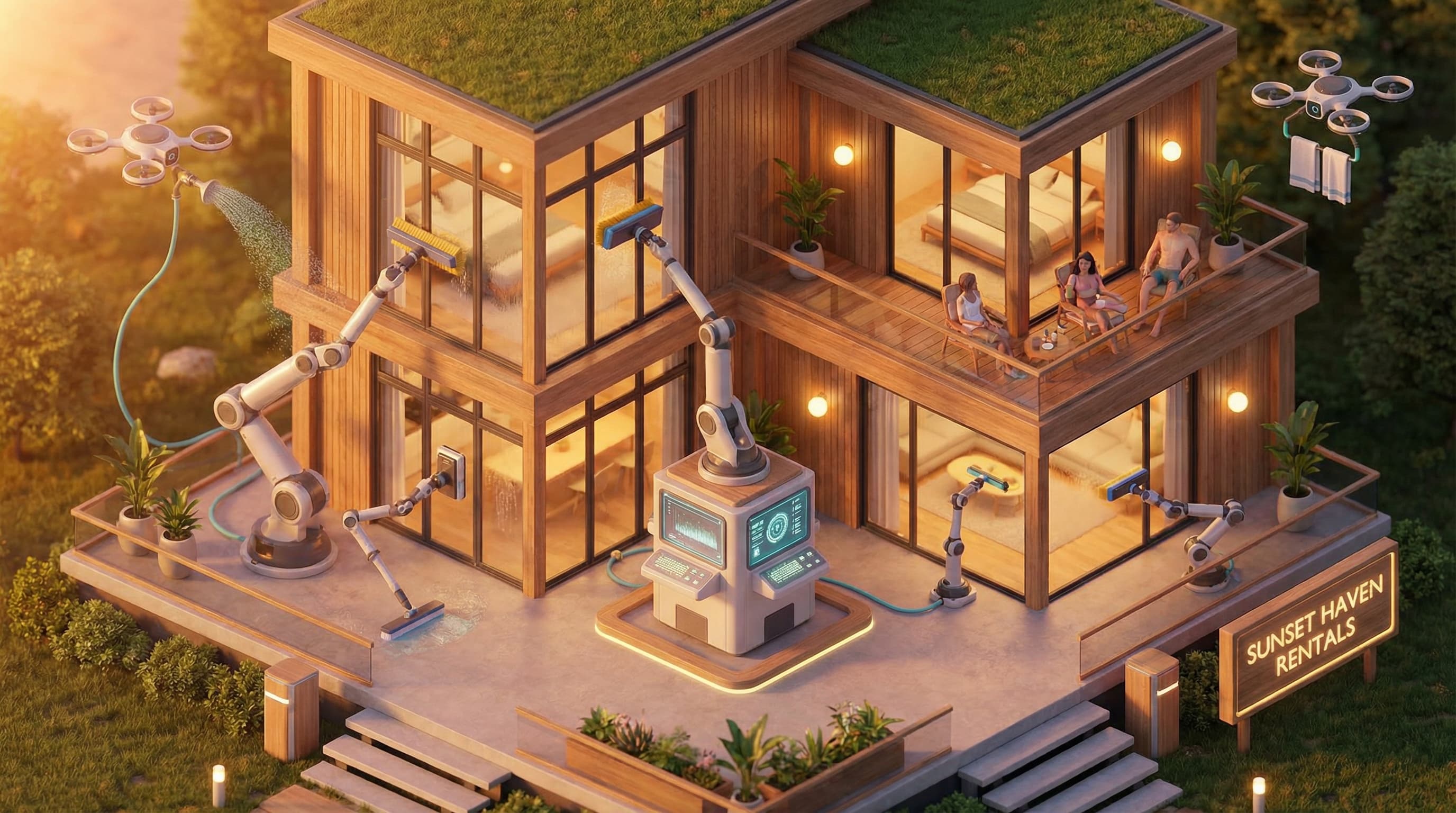
Bringing the Thrill Back to Short-Term Rentals
Rafat Ali's Skift article highlighted a fundamental issue: "no CTO can solve a structural problem." Platforms manage the digital experience while hosts control the physical reality of stays.
The Structural Trap
Airbnb governs discovery, booking, messaging, and payments-everything surrounding the actual stay. Individual hosts make decisions about maintenance, cleanliness, and amenities. As Ali observed, the platform functions "less as a hospitality brand than as an adjudication system with a checkout flow."
Hotels innovate directly on guest-facing elements. Marriott can change room features or services immediately. Airbnb can only modify its interface.
Consumer preferences have shifted notably. An Upgraded Points survey found "62% of Americans now prefer hotels over short-term rentals." Issues like cleaning fees, checkout requirements, and photo-to-reality gaps reflect supply-side failures platforms cannot control.
The Startup Graveyard
Previous ventures attempted solving this through operational control:
- Sonder: $2.2B peak valuation → Chapter 7 liquidation (100% loss)
- Vacasa: $4.5B peak → $130M acquisition (97% loss)
- Inspirato: $1.1B peak → $59M acquisition (95% loss)
The concept was sound-hospitality requires physical layer management. The execution failed. These companies addressed operations through labor, hiring cleaners and maintenance staff, absorbing hotel-level costs without hotel-level margins.
The Uber vs. Waymo Shift
Uber coordinates human drivers with variable quality. Waymo controls autonomous execution consistently. Current hospitality mirrors Uber's model: fragmented supply, variable outcomes, platform adjudication after problems arise.
Future hospitality requires the Waymo approach: "Software that actually runs the operation, not just connects parties."
From People Problem to Software Problem
Property managers charge 20-30% of revenue because operations demand manual coordination. Previous generations addressed this through hiring. The next wave must solve it through software.
Airbnb's AI concierge vision has limitations. "The AI can see you're arriving on a red-eye with kids and suggest having groceries stocked...It can't guarantee any of that actually happens before you walk through the door at 6am, exhausted."
Meaningful solutions require combining "an executive assistant that understands what you want AND a concierge system that can actually deliver it."
The Experience Engineering Shift
Automating operations enables experience personalization. A system recognizing an anniversary booking could arrange "rose petals, champagne, a dinner reservation, all selected, paid, organized, and delivered" without guest effort.
This represents authentic hospitality through automation-what hotels achieve through concierges but platforms couldn't replicate without operational control.
The Bottom Line
"The company that wins the next decade of hospitality won't be the one with the best interface. It won't even be the one with the best AI." Success requires combining intelligent personalization with reliable execution.
"Airbnb built the marketplace. The next era belongs to whoever builds the machine that runs it."
Related reading: The Story of Xenia shows how one operation scaled to 150 apartments through automation, and Traditional B2B SaaS Is Dying explores why legacy software can't keep up.
